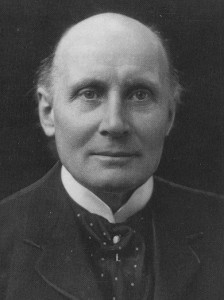
Ch8 of Whitehead tonight was one of the driest most boring reads I have subjected myself to in some time. Think I am going to skip ch9&10.less than a minute ago via Twitterrificanderscj anderscj
Interesting. We hear people echo sentiments like this today as a result of the Internet, that somehow the Internet makes schools obsolete. Don't often hear people make the argument that the existence of libraries have the same effect.
How do we encourage the growth of imagination? It seems like everything the standards movement that has had it's foot on our necks for ten years has done has had the effect of killing the youthful imagination. Actually, come to think of it, it seems most of what traditional schooling does has this effect as well. Aren't most of our most imaginative students punished for their imaginations? Hasn't the notion of an "overactive imagination" come to be seen as a bad trait for kids to have?
"Imagination is a contagious disease. It cannot be measured by the yard, or weighed by the pound, and then delivered to the students by members of the faculty. It can only be communicated by a faculty whose members themselves wear their learning with imagination." Whitehead
I know under the forces dictating the direction and procedures of the present public school system that my own two little girls will not be given sufficient fuel to feed, grow, and develop their imaginations. It has been a priority of mine to grow this at home. Nothing would please me more than for a teacher to complain to my wife and I that our daughters have overactive imaginations. I believe it is a crucial life skill. To do this we go on imaginary adventures nearly every night where the basement becomes a cave, the living room couch a mountain, the island in the kitchen a tower, one bed in their bedroom a spaceship, and another a pirate ship. The three of us have had fantastic adventures over the past few years. We have sleighed dragons, we have negotiated with giants, we have stolen witches broomsticks, and we have been turned into robots. We have even found a portal to another dimension on the wall in their bedroom and a time travel sinkhole in the bathroom.
One of our favorite games is to play "Do you want a chocolate?" where we take turns offering each other chocolates out of an imaginary dish and describing to each other what they taste like. This is especially fun to do around people who are not in on our joke.
And Improv! This summer my 5 yr old saw the video below after which we entered into a two week marathon of practicing similar improv at home.
I can already see the benefits of all this imagination and creativity. Often my kids seem to find solutions to problems that even stump me and my wife. And, having this skill to imagine means never having to be bored unless you want to be.
"universities cannot be dealt with according to the rules and policies which apply to the familiar business corporations." Whiteheadless than a minute ago via Twittelatoranderscj anderscj
Perhaps the reason this nearly 100 year old text sounds like it was written today is because we are in the midst of the same kind of "fundamental change in the intellectual outlook of human society" and to many of us it is clear we are on the verge of a very real "educational revolution." What is odd is that what Whitehead clearly tried to steer his generation toward is still what we find progressive today. Maybe he is wrong. Maybe there is no need for an educational revolution, just people who will always draw this conclusion. Or, perhaps (as I suspect) the "educational revolution" that needed to take place in our last time of "fundamental change" never really happened. Quite possibly we missed a step.
This reminds me so much of what we hear in the public discourse in the battle between the Common Core folks and the P21 folks:
Both groups are right, which is a contradiction. Therefore, both groups must also be wrong. Interesting. Why can't we have it both ways?
"The pupils are bewildered by a multiplicity of detail, without apparent relevance either to great ideas or to ordinary thoughts." Whiteheadless than a minute ago via Twittelatoranderscj anderscj
This is an important point I don't think we pay enough attention to. Students need very much to feel that they are great, that they are special. Self-esteem is incredibly important for motivation to do good things.
And, which of these do we address well in schools? Technology? I don't think so, at least not in most schools. Art? Not when it is always the first think on the budget cutting board. Religion? This one is out for fear of being accused of violating the establishment clause. Science? We do a little better with science but we could do a lot more.
"The history of mankind has yet to be set in its proper relation to the gathering momentum of technological advance." Whiteheadless than a minute ago via Twittelatoranderscj anderscj
Who went back in time and gave Dr. Whitehead a copy of Disrupting Class? This is fantastic material and insight that is worth looking deeper at. What was it in the 1910s that led Whitehead to these conclusions/observations about society and technology? How are our times similar today?
"There is a curious illusion that a more complete culture was possible when there was less to know." Whiteheadless than a minute ago via Twittelatoranderscj anderscj
A lot of what Whitehead writes sounds as if he is talking about the world in relation to what is going on today even though his work is nearly 90 years old. This quote could just as well apply to the political rhetoric we hear from those who say they want to, "Take our country back," or even for those who push for culturally homogeneous schools.
Discovery & Wonder, I absolutely love this recipe!
"The pleasure which art and science can give to rookie the enjoyment which arises from successfully directed intention." Whiteheadless than a minute ago via Twittelatoranderscj anderscj
"Art and literature have not merely an indirect effect on the main energies of life. Directly, they give vision." Whiteheadless than a minute ago via Twittelatoranderscj anderscj
"In the schools of antiquity philosophers aspired to impart wisdom, in modern colleges our humbler aim is to teach subjects." Whiteheadless than a minute ago via Twittelatoranderscj anderscj
"The craving for expansion, for activity, inherent in youth is disgusted by a dry imposition of disciplined knowledge." Whiteheadless than a minute ago via Twittelatoranderscj anderscj
I have to admit that I found this chapter to be a bit uninspiring. He does present an important idea but I felt he achieved his aim within the first three pages and the rest was needless dribble. But, that said, this speech was about how traditional education ignores the process people go through when they learn. Basically, he recognizes that all learners start out with disconnected stuff, then connect them, then make generalizations about their groupings. In his argument he tears apart the notion that learners must first learn the basics before they can tackle more complex subject matter and proposes that we have put things backwards. A basics first education is not sufficiently engaging, he would prefer an immersion approach. To prove this he describes the learning tasks of infants and how impossibly difficult it must be for them to learn something so abstract as how to talk. We don't teach babies how to talk by first making them learn the sounds in the alphabet, they learn to talk by being around people who talk and who talk to them.
"Lack of attention to the rhythm and character of mental growth is a main source of wooden futility in education." Whiteheadless than a minute ago via Twittelatoranderscj anderscj
Not quite sure where he was going with this one. While I agree an I do like this quote it doesn't exactly match up with the theme of the speech. Perhaps he was trying to make the case that this three step process of learning never ends and that we do it throughout our lives, even after our formal school years are done.
I have to admit, I am a bit embarrassed that I have gone this far in my career without ever hearing of this author. I suspect it has a lot to do with American nationalism within education curriculum. Whitehead was British and advocating for many of the same things as John Dewey but from the other side of the Atlantic. In my teacher education I heard a great deal about Dewey but never Whitehead. I wonder if that would have been different if I receive my formal schooling elsewhere abroad.
This book is a collection of essays and speeches Whitehead gave over the course of twelve years. I am unsure what the dates are for each of the essays. This first essay on The Aims of Education is a fascinating read. Being a math teacher, Whitehead doesn't exactly demonstrate the poetic skill of some of the other authors I have read for Twitter Book Club but his ideas are definitely engaging. I find it awe inspiring to read someone who was advocating for things like interdisciplinary learning, discovery learning, specialized study, and caution against standardization from a time and place where the British School dominated the education landscape. Today we look at these ideas as new and revolutionary.
...last time I did this was when I read Ivan Illich's Deschooling Society b/c of reference to it by Seymour Papert.less than a minute ago via Twitterrificanderscj anderscj
"Every intellectual revolution which has ever stirred humanity into greatness has been a passionate protest against inert ideas." Whiteheadless than a minute ago via Twittelatoranderscj anderscj
Whitehead does have his poetic moments. I love this quote. Makes me think of Robert Frost. It also makes me think of all the times we have heard this product or that solution as making teaching or learning "easy." Is easy always better? Is the easy path ever all that educative?
Whitehead makes a strong case against standardized testing here. Yesterday I sat in on a staff development session on assessing NWEA data. Came to realize that in our MYP programme we are giving each student a test in both reading and math each quarter plus they take the state tests in reading, math, and science twice in their time with us. Thats 2 NWEA tests times 4 quarters times 5 years plus 3 MAP tests times 2 times = 46 externally created tests our kids get in their time with us. Now, each time one of these tests is administered (except for two of the MAP tests) it takes up one week of building-wide computer lab access. Thats 42 tests times 5 days = 210 days students and teachers do not have access to our school's computers for use in learning. Since we have fewer than 200 student contact days in a school year that is one full year of a student's MYP program where our schools computers are unavailable. Since we are nowhere near close to having a 1:1 ratio (more like 1:4) our kids only realistically have available access to computers in school for 1 year of their 5 year MYP programme. During that time that they are available I have observe that those machines sit idle and unused about 1/2 to 2/3 of the time. That means that the average student only has in-school access to a computer for learning for 1/3 to 1/2 of a year over the course of their 5 years in our school. If computers do help facilitate and accelerate learning then I think I have a data-driven argument against the use of computers for this kind of testing.
"The machinery of our secondary education is rigid where it should be yielding, and lax where it should be rigid." Whiteheadless than a minute ago via Twittelatoranderscj anderscj
Wow, between 1917 and 1929 Whitehead was calling for interdisciplinary Educ., differentiated instruction, & against standardized tests.less than a minute ago via Twitterrificanderscj anderscj
@Darcy1968 I wonder if I had receive my ed credentials on the other side of the pond if I wld have been as familiar with Whitehead as Dewey.less than a minute ago via webanderscj anderscj
@anderscj Thanks - "It's not what they are at 18, it is what they become afterwards that matters." I like that thought. Read on!less than a minute ago via webMarge Runkle mrunkle
Once a thing is what it becomes, the process of how it got to be that way is lost. When we appreciate an oak tree, we don't think, "acorn".
I am not sure why Chris sent these to me as a DM and not an @reply and I am not in the habit of sharing what I get via DM but I don't think either of these message constitute any need for privacy or confidentiality.

 anderscj