Monday, June 16, 2008

Engagement as Consumers or Engagement as Producers

Last week as we were wrapping things up for the school year at end of year teacher meetings the topic turned to technology changes we will be making over the summer. Through Computers For Learning, a federal program providing surplus computer equipment to schools from federal government offices, we will be tripling our districts number of student use computers. We are also upgrading our servers, switches, and hubs including the server that our terminal computers run from. We are also switching all student use machines to open source software. Last year the two big initiatives were SMARTboards and laptops for teachers. Almost every teacher got a SMARTboard for their classroom and a laptop by the end of this year. However, there still were some classrooms that for both functional and budgetary purposes went without one or the other (or both).


After our tech people (including me) presented a synopsis of what to expect in the fall one of the teachers who did not get a SMARTboard asked if the district would be purchasing any new boards for next year. Now I have never been a huge supporter of SMARTboards as a caveat for student engagement. They are expensive and the payoff I have always suspected is not nearly as great nor is as learner centered as other investments that put the technology in the hands of the students rather than the teachers. However, I do see the benefits after watching the majority of our staff put them into action this past year.

After explaining to the teacher that it is not in the tech budget but that she could request one from the administration or pay for one out of her own budget I offered her another solution. Rather than spend the $1500 or so on a SMARTboard that can only track one pen or touchpoint at a time I could install a Wii Remote interactive whiteboard for her that could track 4 simultaneous points for under $100. She declined. This makes me wonder if she really wanted one of these interactive whiteboards because she knows how it could improve student learning in her classroom or if she just wanted one because other teachers had one and she didn't. However, that is for another post.

This got me thinking. The original reason for the SMARTboard initiative was to improve or increase student engagement in the classroom. Now I must add that this initiative was begun before I was brought on board but it has been my responsibility to help show teachers how to use this tool to engage students. It seems to me that, with the exception of interactive learning games and exercises that rely on a single click interface where one student can be in control at a time, the SMARTboard (and other brands of interactive whiteboards) are largely a teacher tool and not a student tool. The type of engagement they improve is engagement as consumers.
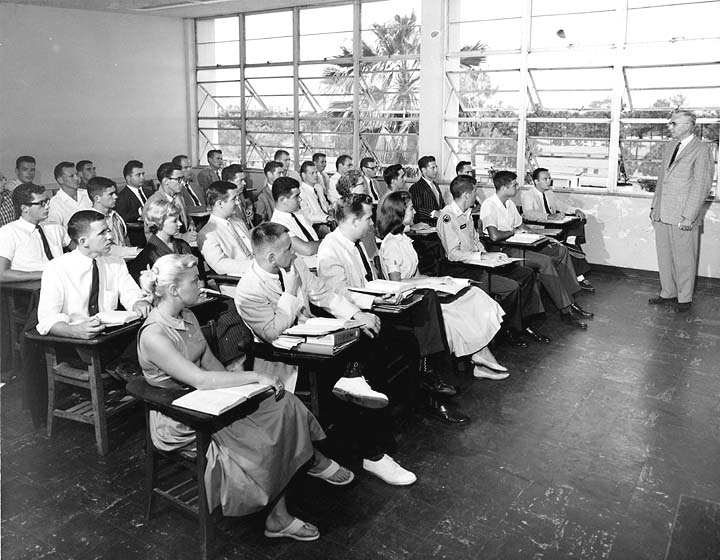


The question of engagement has long been looked at in education as something more along the lines of entertainment or edutainment. "How am I going to engage my students?" too often becomes "How am I going to keep my students entertained?" This definition of engagement fits well with those educators who look at teaching as performance. If you feel the engagement level of your students is directly related to how entertaining your presentations, lectures, and class demonstrations are than the SMARTboard is truly your allay. More so is the projector you need to make it work. You can show educational videos on it (you can also do this with a TV/DVD player), you can show PowerPoint presentations without needing to go back to your computer to change slides (you can also do this with a $10 clicker), you can write notes and diagrams on it and have the computer convert your handwriting to print (marginally helpful), and you can save what you wrote on the board as a PDF file that you can send to others or put on your teacher website (you can do this with any PC by pressing "Print Screen"). For a meager $1500 plus the additional $1000 you have to spend on the projector, you can have a nice tool that can make your 20th century teaching style look real professional.

However, is this engagement or entertainment? One could argue that when students are entertained they are engaged but is entertainment really what they come to school for? The real smart ones end up dropping out when they realize they can get better entertainment at home watching television, playing video games, and chatting with friends online. It is nice when we are entertained but what people go to school for is learning (or at least it should be) and entertainment should never get in the way of that. There must be a better way to engage students without having to make it look like entertainment.

Maybe we need to stop thinking of engagement as being akin to entertainment and start thinking about the things we do that we find engaging. What are the qualities of those things? I am engaged when I am doing my taxes but I certainly am not entertained. I am engaged when I am planning a camping trip but I don't find this entertaining. I am engaged when I am editing Wikipedia though I can't say this much ever feels like entertainment. I am engaged when I am working on a home improvement project but I certainly never find it entertaining. What is common about all of these activities? The only conclusion I derive is all engaging tasks require something meaningful of me. I am not passive when I am engaged. The times I can think of watching TV or watching a movie when I am engaged I am engaged because mentally I am doing something. I am analyzing the plot or I am comparing and contrasting what I see with what I already know, or I am finding information there that can support one of my other projects I am working on or it meaningfully informs something else I am interested in. Any way I look at it, engagement comes from my own activity in something.

This is why students drop out of high school, this is why some sleep in class, this is why SMARTboards rarely cure a teacher's problem with engagement in the classroom. Because, as soon as the novelty of the new wares off you are still left with trying to guess what to show to a class that will make them actively engaged mentally. It is much easier to achieve an engaged student by presenting them with problems to solve or projects to work through. It is far easier and more effective to think of how you are going to engage your students as producers of products and knowledge than how you are going to engage them as of consumers of information.


Now, if you have $2500 to spend on technology for your classroom with the goal of improving student engagement with it there are quite a few options you have that are likely to produce better results than a SMARTboard and projector. $2500 will buy a class set of digital cameras, or it will buy six Asus eee laptops, or it will buy quite a few digital audio recorders, or it will buy a printer that will print poster size images, or it will buy a ton of Legos (have you ever seen a kid not engaged with Legos?). I could go on and on.


The point is, when you are talking about how to get more student engagement in your classroom you need to think about what the students are going to be engaged with, not how the teacher is going to be engaging for the students. If you have the dollars to supply both student-based and teacher-based technology to support engagement than by all means purchase an interactive whiteboard. They are cool and there is a lot of good you can do with one. However, please don't neglect needs to get at the wants.

Thursday, May 8, 2008

Did You Ever Wonder?

This video would be great to share with our school's Green Committee.


Ask a Ninja - What is Podcasting?

Monday, April 28, 2008

Student Centered Pedagogies - Part 4

-Continued from part 3

Step 4 - Building a Launchpad

Now that you have determined what performance objectives the state, your school, you, and your students all feel are important to meet and eliminated the ones they have already mastered through curriculum compacting it is time to lay the foundation for designing projects for the students to do to meet the remaining objectives, goals, and targets.

I have seen and used many different approaches for this. In fact, it is necessary to apply varying approaches because not every approach will work best with all students. I see two broad categories for projects: Externally motivated and internally motivated. Externally motivated projects rely on events that happen or have happened recently outside the classroom. We can broadly think of these as current events that inform the curricular topics still needed to be addressed. These external sources of motivation are useful because they make apparent the why of learning anything new. An example of this would be students writing letters to the editor about a current event for an English composition class instead of doing grammar exercises. Internally motivated projects are those that are driven by student personal interest. With these projects students also immediately see the purpose for learning but what one student does might not interest other students to the same degree. An example of this would be a student in a math class who is interested in dirt bikes using data obtained about dirt bikes to make predictions, design a better bike, or determine the laws of math and physics that are at work with biking.

Another way to categorize projects is by level of collaboration. There at least six different levels of collaboration: individual, partner or small group, full class, partner with online or distant partner, small group with online small group or distant partner, or participation in a global project (ex. Wikipedia). Some students will be motivated strongly to work independently and show a strong ability to manage projects by themselves.

The individual project model (either internally motivated or externally motivated) will work well for them. For these students it is useful to conference with them before and after a project checking in with them only from time to time to see how they are doing and guide their self paced learning by making suggestions. For these students it is important that they know and feel that they are in control of their own learning and understand the expectations in terms of performance objectives.

For students who do not work well independently or who find they work best when there is a more social element to the learning environment either small group or full class projects are best for them. Using a democratic classroom the students can still feel they are in control of their own learning. However, these two models (especially full class) are much more teacher directed than an independent model. Project development will be nearly identical in a small group or full class as it is with individual projects but in most cases will take longer because you are adding the democratic element. The old saying, "If you want to go quickly go alone, if you want to go far go together," applies here. In a group or class project you will have the added resource of multiple talents, personalities, and abilities but you will also have problems not present with independent work.

The biggest problem with group or full class projects is making sure every student does their fair share of the work. This can be addressed in the planning stage. If each student is assigned a role or task they will each have their own contribution but they will also each have their own separate set of assessment criteria. It should be stressed in these cases that what the teacher will assess will not be the group's final product but rather the individual contributions of each member of the group. In a way, this turns group projects into many individual projects connected through a common theme. With this model there is often an additional motivator: peer pressure. If one student is depending on data from another student to complete their role they will likely put pressure on that student to make sure they get their stuff done. As long as you have sufficient momentum with your project so the group feeling doesn't swing the way of apathy this will work to your advantage.

Step 5 - Assessment

With project-based learning assessment is the perhaps the most important duty of the teacher. It is important for students to know before they start work on a project how they will be assessed. Rubrics and checklists help with this but when each student is required to do something different this can be daunting if not impossible. First, it is good to anticipate project tasks that will be common and have rubrics ready to go. For example, an essay writing rubric, a poster rubric, a presentation rubric, etc. For more specific tasks it is important to work assessment planning into project planning. Work with the student(s) to articulate how you will assess whether they learned or achieved desired learning objectives or if they have met the standards. Then, as students are working on projects constantly refer to these rubrics to guide their research, discoveries, and work. Using a tool like Rubistar helps a lot with this stage of the PBL process.

Thursday, April 17, 2008

Student Centered Pedagogies - Part 3

See Part 2

Project Based Learning:

I was first formally introduced to project-based learning as an approach to curriculum and instruction three years ago though as an art teacher what I have done my entire career has been related to this concept. At that time I started teaching at an alternative school where the staff had decided to invest heavily in the project-based model. Our school district was in the process of being approved as an IB school and as part of that had adopted Understanding by Design as the curriculum framework district wide. This was a massive undertaking by the district as the next few years were marked by something that looked like mandated reflective practice, many training sessions, and lots of curriculum alignment. What we saw occurring in the other "normal" schools was what I have concluded was a massive misinterpretation of the backwards design model. Rather than stripping learning down to its essentials and examining what it is that really needs to be taught and determining exactly how learning is really done, regardless of our previously held beliefs, teachers for the most part approached UbD as something they could mold over their previous programs and not a fundamental structure change. What resulted were slight improvements but massive confusion on the student part as to why teachers were doing some of the things they did.

At the ALC we took a different approach. We eliminated most of our classes and replaced them with a semi structured time we called Inquiry. Inquiry was about project-based learning and we used the UbD framework to structure this time from the ground up. The idea was that students would not take specific classes during Inquiry but could work on projects they develop with the guidance of the teaching staff that could satisfy part or all of the credit needed for course completion in any of the subject areas. Inquiry was not without its flaws and we did have massive growing pains as we all adjusted to this new system of instruction. We had to overcome curriculum issues, behavior issues, time management issues, and issues related to differentiated instruction. However, we were all on the same page with this. Very few of us had experience doing anything like this and we all learned from each other and made changes in our program as we saw fit and when we saw them needed. When our Inquiry program reached its maturity we had a system where students owned their own learning, collaborated with each other, and achieved learning objectives by doing rather than rote memorization. Students were able to complete their high school credits engaged in topics that interested them. Because it was driven by student interest and personal aptitudes students were more engaged in the learning process.

Step 1 - Start from scratch:

The Inquiry model as I have described it does not fit well in a traditional school setting. Especially not one where students are only in a class for 40-50 minutes each day. However, there are elements that could be pulled from this experience and applied within the traditional school classroom. First, if we remove all of our old baggage and prior beliefs about how learning occurs or how a classroom is supposed to be managed we have a chance at actually finding a better model of instruction. So, put aside everything you have done in the past and every way you were ever taught (don't toss it out, we may reference it later).

Step 2 - Identify limitations, resources, and boundaries:

What are our limitations? I am presuming, based on my prior experiences in "normal" high schools, that teacher's classrooms are treated like islands and what you do in your class has little transfer to other classrooms (obviously not always the case but often true). In the case you are doing this alone or only with a single department and not as a building-wide initiative you will be limited by the Pavlonian bell schedule. You will most likely also be limited by the mandate to report assessment outcomes in the form of grades. Likewise, you will be limited to reporting credits as the class you have been assigned to teach that hour, unless you can partner with teachers in other classes. Since you probably have neighbors in your building who have their own thing going on and don't want their classes interrupted you will most likely be limited by the physical boundaries of your classroom and places on or near the school grounds where your presence will not be misconstrued as a disruptive presence.

What are our resources? I am assuming that your classroom has at least one computer and an internet connection. I am also assuming that you have a modest budget for supplies, capital, and curriculum. You most likely also have about 30 desks and chairs or tables and chairs. I am sure there are community members who you can count as resources as well as places of interest within reach of your school. If you have a webcam and microphone you can connect both visually and audibly to people in distant locals as well. If this is not something you already have it is something even the most modest budget can make room for. Pretty much anything out there that is open source or public domain is available. We could probably list all your resources for a very long time but for sake of getting on with things lets just keep that list in our heads for now.

What are our boundaries? It is also important to consider what our boundaries are. What can we do and where can we go. Is the internet filtered at your school? If so what sites are limited? Of course there are legal boundaries that limit what we can do but there are most likely also boundaries created by school regulations. We need to make sure we respect those because if you want something to happen in your classroom that does not follow the traditional method of instruction you do not want to be viewed simply as a disruptive influence in your school. Are there limitations created by the expectations of administrators? These are important to note if you want to keep your job.

Step 3 - Identify Learning Objectives

No matter what learning theory you subscribe to or what teaching method you choose to use it is important to identify learning objectives. The problem I often see, and something I was guilty of when I was a new teacher, is that many teachers confuse learning objective with learning activity. Another thing that bothers me, and one of the issues I take with the UbD model, is the practice of deriving learning objectives from content standards. The problem with this is with most content areas the standards are pretty basic and represent what our most under performing students should be able to do and know at the most basic level. The standards are not a good starting point if you want to engage or teach to the level of the majority of the students in your classroom.

Now, once you have determined what key ideas students should know when they complete your course then you can check them against the standards to make sure you did not forget anything. Now is time for curriculum compacting. How are you going to assess which of these objectives don't need to be met? How are you going to develop a pretest or preassessment that will accurately determine which students already know some of these key objective? I am also a firm believer that your own objectives are not nearly as important as those of the learners. How are you going to find out what students want to learn. The ideal curriculum is one that blends the objectives the teacher has for their students with the learning goals of the individual learners and doesn't waste time trying to meet objectives that have already been met. This means that no class you teach will ever be the same. You can't teach one year 30 times. If you have three sections of the same class there is no reason each of those classes have to be the same nor should they. This also means that you can't plan activities in June for a class that doesn't start until September.