Yesterday in Where have I been? And other things. I finally broke my nearly two month blogging hibernation and explained why my blog has been so silent this fall. I explained that I have been caught in what seems like an ethical or moral paradox professionally going from working at an integration district to a Hmong immersion charter school. In that post I made a statement about school funding of non-Broad/Gates/Walton-funded charter schools in Minnesota receiving and operating with some of the lowest per-student revenue in the state. I was going by some old figures so I decided to pull up the most recent data today and verify that my statements were indeed true.
It seems between foundation aid, grants, and other donations the Community School of Excellence receives $11,983 per student in revenue. $9,370 of those funds come from foundation aid and $2,600 come from federal funds. If you take into consideration the 60/40 deal the legislature cut this year to to schools (money we will likely never see paid back), we are really looking at more like $9,790 per pupil revenue for CSE. So, it stands to reason that if one were to figure out which school districts in Minnesota were suffering the least from the 60/40 dealayed payment one would look at total revenue per pupil a school or school district received from non-state sources like federal aid, local property tax, grants, etc. So, when you add up all non-state funding and divide by the number of kids in a school, how does CSE compare to other schools?
school
non-state aid revenu/pupil
%of students on free and reduced lunch
Edina Public Schools
$6,112.00
8%
Minnetonka Public Schools
$6,323.00
9%
Wayzata Public Schools
$6,405.00
15%
Eden Prairie Public Schools
$5,857.00
18%
Westonka Public Schools
$6,170.00
20%
Moundsview Public Schools
$6,481.00
28%
Inver Grove Heights Public Schools
$4,861.00
34%
Hopkins Public Schools
$7,847.00
35%
St. Louis Park Public Schools
$7,504.00
35%
Spring Lake Park Public Schools
$5,607.00
36%
Burnsville Public Schools
$5,564.00
38%
Bloomington Public Schools
$6,777.00
39%
WEST ST. PAUL-MENDOTA HTS.-EAGAN
$6,396.00
40%
Robbinsdale Public Schools
$6,897.00
46%
SOUTHSIDE FAMILY CHARTER SCHOOL
$8,648.00
56%
Richfield Public Schools
$6,031.00
64%
Saint Paul Public Schools
$5,884.00
72%
KIPP MINNESOTA CHARTER SCHOOL
$9,103.00
88%
Community School of Excellence
$2,613
90%
EL COLEGIO CHARTER SCHOOL
$6,791.00
90%
RICHARD ALLEN MATH-SCIENCE ACADEMY
$7,076.00
94%
I threw CSE's numbers in there just for comparison. Most districts and schools in the state receive around the $2k-$3k range of non-state revenue.
I find this fascinating. The schools listed above (except for CSE) are all some of the best-funded schools in the metro-area. Notice which districts are not on this list. Also, consider the position of EMID board members and superintendents who are thinking about closing down their integration schools. Which of these schools are EMID schools? Which of those EMID schools are pushing the hardest to get rid of the integration district?
Also, among the charters listed above, who is providing the money? In the case of three of the five charters listed their non-state revenue equaled or surpassed the amount of foundation aid the state provides. When someone else holds the purse strings, who does the school really serve?
I know I promised that I would write today about what we are doing at CSE. We are doing some real exciting and ambitious things with the children here but I just had to revisit this numbers game one more time. Tomorrow I'll write about CSE's 1:1 laptop program, our move to Google Apps for Education, and our foray into IB.
I should be ashamed of myself. It's been nearly two months since my last blog post. A lot has gone on in that time and to be honest, I wasn't sure how to process it or reflect on it on my blog. So, instead of writing about the issues that I have been confronting everyday I've just let my blog go dormant. I have not written anything significant nor have I been able to keep up with my Twitter Book Club archiving.
So, where have I been?
Last year I was employed by East Metro Integration District 6067 in St. Paul under an Edtech ARRA Grant that ended June 30th. As you may or may not know, integration districts are special school districts created by the state of Minnesota charged with carrying out the provisions of the Brown vs. the Board of Education decision to desegregate schools. In St. Paul, this has been done for the last ten years or so with two magnet schools: Crosswinds Middle School in Woodbury and Harambe Elementary in Maplewood. The integration district is created as a sort of joint-power arrangement between St. Paul Public Schools and neighboring suburban school districts. The state issues "integration revenue" which the integration district uses to fund equity and desegregation programs in it's member school districts. In turn, each member district makes available to it's students the option of attending one of these magnet schools where inner-city and suburban students attend class together.
Now, the time I was employed by EMID was a tumultuous time for the organization. In the year and a half that I was employed there the district went through four different superintendents and nearly every administrative position in the district changed. When the first superintendent retired the district hired Brenda Casselius to take his place. Brenda came in and shook the tree pretty hard causing a lot of people to either leave or to be on guard. This in itself wasn't necessarily a bad thing but as the political winds would have it, not long after taking the assignment she was called upon by the newly elected Governor Dayton to be our state's Commissioner of Education. When she left, a neighboring district's superintendent stepped in as acting superintendent until an interim superintendent could be named. Soon Jerry Robicheau, a retired superintendent of Inver Grove Heights Public Schools (one of the 9 EMID member school districts), was named interim Superintendent.
A couple of things about EMID are worth noting before I move on to discussing where I have been and where I am now. First, as a result of NCLB and the pressures placed on school districts to make AYP these two magnet schools have in a way become a form of alternative school for many of the member districts. When a student is not performing well in a given school it is often felt by the school that perhaps the school is not the best fit for that student. It is in both the school's and the student's best interest to find them better placement. Given the high stakes of test scores there is an added incentive to pass lower performing students along to other schools where they will hopefully have better chances but at the very least their removal will bring up test scores in their previous district. What adds to this arrangement is one thing Crosswinds had going for it was a fantastic special education department, a fact many referred students' families told us was one reason they decided to send their children there. As a result, even though these two schools offer fantastic learning environments with some of the most professional educators I have ever had the pleasure of working with, meeting AYP was always an uphill struggle.
The other thing worth noting is the political climate (both local and national) which we find ourselves in. With the rise of the Tea Party we have a resurgence of personal Liberty being held up as an ultimate American virtue. Liberty and equity have always been at odds with each other. While schools like Crosswinds and Harambee seek to create an equitable learning environment for students, far right wing politics seek to deconstruct such environments because equity for all means some people have to do with less liberty. As a result, when the Republicans took control of both houses of the MN legislature last fall one of the non-negotiable budget cuts they made was to eliminate the integration revenue. This elimination, essentially, takes away any carrot EMID member districts have to staying members of the integration district. Without receiving services from the integration aide membership meant simply loosing student units to the magnet school. No school district likes to loose funding because of school choice. In EMID's case, the member districts control the access families have to that choice.
One of the reasons I have been so quiet on my blog is I have been put into an ethical dilemma. The school district I just left and one I highly support was devoted to racial desegregation and equity, two goals I wholeheartedly support. The school where I ended up landing a job this fall is a charter school in St. Paul, the Community School of Excellence (CSE), that serves mainly Hmong students. Where my ethical dilemma resides is that in some ways schools like this one are self-segregating. In many ways it feels like coming here to work is a betrayal of the principles we fought for at EMID.
On the other hand, there is real good reason for schools like CSE to exist, especially if they serve ethnic groups brought here from refugee camps in places where US military action caused their displacement. This was the case for the Hmong. What many people do not know is that in the Vietnam War there was a secret CIA operation known as the Secret War (also known as the Laotian Civil War) that took place. Foreign military were not allowed to bring troops through Laos so the CIA recruited Hmong soldiers to fight with them from the mountains of Laos. Led by General Vang Pao the Hmong soldiers rescued downed American pilots and fought the Viet Cong from the mountains and protected the Ho Chi Minh Trail. In exchange for their involvement a deal was struck that if things turned sour and the Hmong were displaced from their homes they would be given places to live in the United States. Things did go sour and the Hmong were displaced from their homes. They were forced to live in refugee camps where they awaited transport to the United States. Today many still wait even though generations have passed.
For some reason Minnesota became the place where most Hmong in America decided to settle. The highest concentration of which is in St. Paul where my new school is. When the CIA made their promise to the Hmong people I am sure they did not take fully into consideration what would happen culturally to their people if they moved to the United States. The USA is a cultural assimilation machine. It is the whole melting pot concept but with some rather disturbing consequences. Time and again cultures which try to coexist with American culture either get absorbed into our culture or they are left to die. Over time the uniqueness of individual cultures disappear and what we are left with is cultural genocide. I know this is what the leaders of these Hmong immersion charter schools must be thinking. This is painfully obvious when they talk about the importance of retaining the mother tongue.
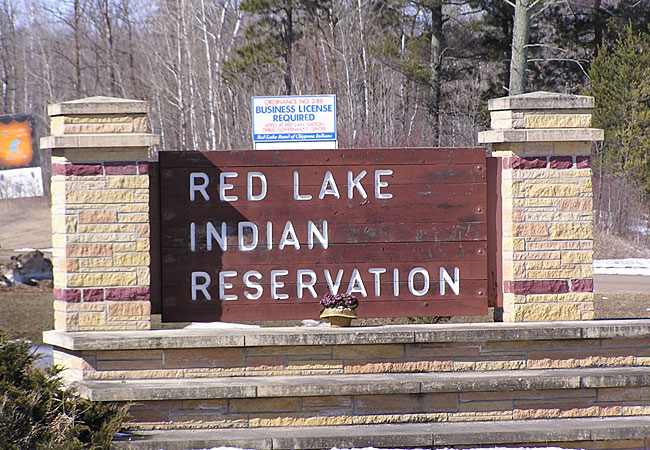
What I fear about this arrangement though is that schools like this one that self-segregate in order to try to preserve their cultural heritage will end up being no different from our American Indian reservation schools. Already there are tell-tale signs that this is what is already happening. Reservation schools are treated just like any other public school. They receive foundation aid and their local taxpayers are allowed to levy local property taxes to increase revenue to their schools. Unfortunately, the property values on reservations are so low that even a very high percentage would not lift school funding much beyond the foundation aid. Essentially, our state has found a way to keep economically depressed children on Indian reservations even more economically depressed. I see the same thing happening with these charter schools in the inner city. The state allows schools to be independently chartered and locally run but these charter schools are not allowed to levy taxpayer funds. Unless they are given grant money or find a Broad, Gates, or Walton to make up the difference they, like the reservation schools, must rely solely on foundation aid, aid which is nearly 1/3 per pupil what Minnesota's richest school district spends on it's children. And by the way, CSE has an 87% free and reduced lunch rate and nearly 100% ELL population. Most of our students are new to the country within the last four years. If there is a group in Minnesota in need of a greater portion of state aid it is this group. So, this is my moral dilemma. I want to help support the Hmong people to retain their cultural heritage while at the same time supporting racial desegregation. The way I see it both EMID and CSE are victims of present political winds in education. Winds that help to ensure liberty for some and justice for those who can afford to pay for it.
Tomorrow I will write more about what we are trying to do at CSE.
For what it is worth, I made a map this morning showing where Minnesota school districts are whose total revenue from property taxes is more than 28% or less than 3%. This is what it looks like:
As you can see, all of the greater-than 28% districts are in the Twin Cities and they represent only a stripe that runs from the SW to the NE and certainly does not represent the majority of the communities in the Twin Cities. Not surprising, those districts at the top of this list are also the ones with the highest property values. All of the districts with less-than 3% are in northern rural communities. Comparing this map with a graph published last week on the MN2020 blog reveals something very troubling about school funding in Minnesota:
Of interesting note, what are not included in my map are charter schools. Charter schools are not allowed to levy local tax dollars and what money is levied by districts stay with the student's home district. Most of the state's charter schools are also not backed by large corporate interests, though a few do receive a large amount of funding from those sources. This raises a couple questions for me.
If a school relies on corporate donation to maintain its services, whose needs does it serve: the public's needs or the corporate needs?
If the push in the "edreform" movement is toward more charter schools, this really means we choose between truly public charters or corporate charters. Isn't the reason for all this "Edreform" really just a way to spend fewer tax dollars on public education?
For the record, I support charter schools. I like many of them and I think many are doing very good things for kids. Some of my favorite public schools are charter schools, I even work for one. But, the charters I support are ones which serve community, not corporate interests. If our politicians are serious about charter schools being the answer to our woes in public education then they need to start funding them with public money. And, if they are serious about improving the quality of all our schools in the state they need to do something about what this graph and this map represent.
Two years ago, when my art teacher position at an alternative high school was looking like it was slated for the budget cut slating block, I started to grow concerned about the financial future of public education and what it means for the realities of the classroom. We have seen the cost of educating a child rise every year faster than the rate of funding for schools. As a result every year we see class sizes increase, more programs cut, and less money for classroom budgets. It was about that time that I was turned on to the concept of disruptive innovation in education made popular by the Harvard Business Professor Clayton Christensen.
That spring my art teacher position indeed was cut due to no fault of my own. When I started looking for work, uneasy about the future of our traditional public schools and unsure about the long-term stability of online or virtual schools I decided the most intelligent option was to diversify my professional activities. I took a full-time job as a technology integration specialist for a traditional brick and mortar school and a part-time position with an online charter school.
Over the past year I heard the same old budget issues raised at my full-time day job. There are warnings that programs might be cut and "extras" will need to be examined scrupulously before we spend the money on them. At the same time my online position was thriving. By the end of the year, evidently, my class numbers for the virtual school had grown to where my position was nearly full-time there as well. By fall of this year the virtual school had to split my position, giving a full-time position to the person they hired to take over my bustling classes. Then, just last week I saw that the Oregon branch of Connections Academy became the single largest high school in that state. What is going on here?
The cost of educating a child in an online setting is exponentially less than that of educating a child in a brick and mortar school. With a virtual school you don't have to pay for building expenses, one teacher can manage a lot more students because they don't have the same classroom management issues to deal with and most mundane tasks can be aggregated. Personalization of learning is much easier to do in the online school as well.
Now, not every student is equally suited for online learning. I strongly believe there is still a place for the consistent face to face interaction that brick and mortar school provide. To be successful online, a student must have the self-motivation to work through assignments and lessons without a teacher present and must have a positive support structure at home. Students who lack one or both of these things would benefit more from a learning environment where this kind of motivation can be provided.
My growing concern:
In every scenario I see, especially with the current economic crisis, doom is spelled for the fate of traditional educational settings. If we keep going the way we have been going students are going to leave to enroll in virtual schools and class sizes, programs deemed "non-essential" in the traditional school will be cut and those who teach "essential" courses will see enormous class sizes. Why don't we see a stronger push against virtual learning from our traditional schools? I think teachers are tired of fighting for increased funding, they don't see a solution to fight for, and many see the benefits virtual learning bring. The only argument against virtual schools that I hear over and over again is over a concern for lack of social interaction. But we need to examine and ask ourselves, "What are schools for?" There is the Jeffersonian idea that schools are supposed to prepare students to be members of our society and then there is the Hamiltonian idea that schools are to prepare students for their careers. Neither aim is greatly addressed with the issue of social interaction. And to address this issue, my online students know each other, they have friends, and their social groups outside of school more positively fulfill this role than brick and mortar schools ever did. So what about the fate of traditional schools?
Doomsday Scenario:
We are seeing more and more foreclosures on homes, taxes on which are the source of public school funding.
Housing crisis, coupled with the subsequent economic meltdown means very little money for schools.
Only Language Arts, Science, Math, and Social Studies are left after cut backs.
Class sizes are in the 50+ students per teacher.
Schools forced into 4 day week to save on transportation and heating.
Students have to supply their own textbooks.
No extra curricular activities.
No field trips.
Teachers have to work more years before they can retire.
With 50+ students in one class, the only manageable teaching strategy is lecture hall style direct instruction.
Meanwhile, while class sizes are still at 50+ in the virtual school, each student's lessons are personalized and easy for the teacher to manage.
With fewer costs associated with online education there is money for extras such as field trips and extra curricular activities.
So, what is the answer:
Let virtual schools grow and become the new mainstream schools.
Traditional public schools need to transform and become more like our alternative schools or area learning centers.
We need to abandon the bell schedule and view our teachers not as people who teach classes but as expert resources within the organization.
Student learning needs to be personalized. This can be done by assigning students an adviser who works with the student to develop a learning plan.
Part of this plan could be taking core, specialty, or advanced classes online.
Invest in face to face course offerings that are done better in person than online (art, theater, dance, music, physical education, industrial technology, etc.).
Teachers who do not teach courses described in #6 split their time between advising and teaching online.
Only probationary students (those who fall behind) need to show up every day. For the rest, school is a place they go for some classes or to use the school's resources.
By cutting the arts, physical education, industrial technology, and extra curricular programs we are eliminating from our brick and mortar schools what they do best! All other content areas are better served by virtual schools.
The survival of our traditional schools depends on a merger between the virtual school and the traditional school and an investment in the very programs everyone is cutting.
What needs to happen:
State Education policy has to be revised either to state that all students can be served by an ALC or traditional schools can offer classes as project-based so they are not held down by seat-time requirements that are outdated and tied to the antiquated notion that we need to prepare students to punch a clock.
Training in distance learning pedagogy needs to be required of all pre-service teachers and all teachers whose license is up for renewal.
Tonight I attended a school board meeting. Not by choice mind you but because members of our local teachers union take turns taking notes at these things. There were plenty of places I could think of where I would rather have been: at a movie, shopping, online reading by RSS feeds, at home playing with my toddler, etc. However, even though I was dragged to this event I must say that witnessing the process was riveting as it always is. Sitting in on a school board reminds me of just how insure our profession is and how resistant it is to change.
School boards were created originally in our country to ensure that major education decisions were made at a local level by elected officials that supposedly have the best interest of the taxpayers and local community at heart. If you look at how things are financed and how they are governed in this country it all follows this structure. Federal funding for education is minimal and to tap into those funds they do dictate certain criteria be met. The vast majority of school funding the fed leaves up to individual states. If you look at individual state budgets the majority of taxpayer money always goes to education. Then, if you are lucky enough to live in an economically well off school district a large chunk of school funding comes from the taxpayers (thus the gap in education provided by public schools in wealthy areas as opposed to poor areas). The people then elect a school board that has final say in how these funds get dispersed and often get their fingers into nitty gritty school policy issues. The boards then appoint Superintendents who are in charge of hiring administrators and teachers to carry out the policies of the school.
The scary thing about this whole process is that a school board member doesn't necessarily have to be a supporter of education. Often school board members are elected to the board feeling they are there to represent those who have little vested interest in public education. This might mean they want to make sure their taxes are low or want to derail the public system to make room for private options such as private schools or home schooling. Or they feel they are put there by a portion of the constituency who want them to impose some sort of moral value or moral code on the school such is the case with issues like creationism vs. evolution. This is always the dilemma of those who push for change in education. Those who have ultimate say are not always in their positions because they put the welfare of our children first or value the education of our children first. There is far more at work when making decisions than that. Now, I don't think anyone is ever elected to a school board with the intent of doing harm but often their values do not match those that statistics show are best for our kids education. Often these school boards become deadlocked on issues because of this and deadlock means nothing is done.
In this particular school board meeting I observed the main point of debate was all day every day kindergarten. This year has been a trial year for this program in our district. We have gone to great lengths to document the impact this has had on this year's kindergarten students. We measured last years students at various points in the year and applied the same rubrics to this years students. The result was that while last years students started the year slightly ahead of this years students academically and cognitively after having them in the all day every day program they measured ahead of last years students when measured mid year. In fact, the level they collectively reached mid year was higher than last years students at the end of the year. I have personally observed these students mastering complex concepts such as fractions and probability that would never have been possible in a half day or every other day program. There have also been tons of parents come before the school board to sing all day every day's praises. Still, despite overwhelming evidence that this program is good for our kids, the board remains unable to make a decision about what to do next year. I have to conclude that this has to be attributed to board members who feel they do not represent the families of next year's kindergarten students (or any future kindergarten student for that matter) but rather represent families who would rather see their kids at home or their tax money in their pockets.
I think from looking at this debate a few things are clear about the nature of public schools and how they are governed. First, should something come up that would require immediate action traditional public schools would not be able to handle it because the process is not designed to handle major change. Second, the more attention is paid on an issue the more in jeopardy it is (whether it is good or bad) and the more something is allowed to go unnoticed the more it will thrive in this system (in other words, don't stand out, don't do things radically different, and don't do things that will attract attention because no matter how good it is there will be someone opposed and ready to make it an issue). This I believe is true of any organization. Look at The Apprentice. On that show there is always a contestant who rises to the top four because they kept a low profile in the beginning. Third, statistics don't always matter and some people will never change their minds. Statistics are great if we are clear that what we are measuring is of value to all. If we want school achievement and the statistics look great fine, but what don't the statistics show. Statistics can be twisted by anyone and are always viewed by the reader differently based on their own bias before they are presented to them. It is almost impossible to shake someone with strong convictions. If they show something positive there is likely to be someone who says they don't measure what I care about so I am going to dismiss them.
This is at the heart of a problem that will soon become a crisis in this country. Every year the cost of educating a child rises at a rate greater than the money states can provide. We have to make great changes to counter this. Second, statistics show that in the next five years our nation will loose the majority of it's teachers either to retirement or to career changes. Last year alone South Carolina only graduated one Chemistry teacher and that statistic is pretty common across the states. We are also facing a national fiscal crisis. Multiple sources are telling us we are headed into a recession. What are the statistics on levys and referendums in times of economic recession? I am sure they are not good. Recessions mean fewer dollars for schools. How is today's school board equipped to handle such a problem?
I moonlight as a teacher for an online public charter school. This is a very part time job for me. In fact, I probably only spend 6-10 hours a week working for them. Still, I have 375 students in 2 states enrolled in one or more of 10 classes I offer. In such a system I can be more productive than I could be in a traditional face to face setting. Many people in the distance learning community are looking at these kinds of statistics and saying that this is a solution to our looming crisis in education. How is this public school structure equipped to deal with this? I could very easily add students in other states if I had the licensure but to do so I have to go through the process of getting licensed in each individual state and to some degree have to go through local channels to work with students. I believe there is a better way to handle this.
I used to live in an old house. One nice thing about this house was it was amendable. I could change the color of the walls, I could add or remove walls if I wanted, I could update the decor. After many years of previous owners doing just that the paint got so thick that it began to peal off in thick chunks leaving a large areas of the wall that had noticeable texture issues. The non load bearing walls had been moved so many times there was evidence of where they had been previously. All these additions over the years had resulted in a house that was difficult to restore. This winter my wife and I bought a new house. This house still needs work, the basement is not finished, the yard needs landscaping, and the walls are all battleship gray. The difference is with the new house change is easy. We have an open canvas with which we can do anything we want with relative ease where with the old house we were constantly trying to deal with the structure we got.
We are living in an increasingly more globalized world where things that happen in other people's neighborhoods are more and more relevant to us and what happens in places other than the local community has greater and greater importance to us. Technology is changing fast and allowing this to happen. The television brought news of other places and ideas from outside the community into our homes in the 1950s and web 2.0 is now making everyone a publisher/producer/broadcaster. With the ability to be connected in such a way shaping the way information is shared and having a trickle down effect across every aspect of our culture does it make sense to maintain the education system controlled by a locally elected school board? or do we need to build a new house that addresses concerns of contemporary life?
In the meantime, lay low, try not to be noticed, and don't do anything too extraordinary.