I should be ashamed of myself. It's been nearly two months since my last blog post. A lot has gone on in that time and to be honest, I wasn't sure how to process it or reflect on it on my blog. So, instead of writing about the issues that I have been confronting everyday I've just let my blog go dormant. I have not written anything significant nor have I been able to keep up with my Twitter Book Club archiving.
So, where have I been?

Now, the time I was employed by EMID was a tumultuous time for the organization. In the year and a half that I was employed there the district went through four different superintendents and nearly every administrative position in the district changed. When the first superintendent retired the district hired Brenda Casselius to take his place.
 Brenda came in and shook the tree pretty hard causing a lot of people to either leave or to be on guard. This in itself wasn't necessarily a bad thing but as the political winds would have it, not long after taking the assignment she was called upon by the newly elected Governor Dayton to be our state's Commissioner of Education. When she left, a neighboring district's superintendent stepped in as acting superintendent until an interim superintendent could be named. Soon Jerry Robicheau, a retired superintendent of Inver Grove Heights Public Schools (one of the 9 EMID member school districts), was named interim Superintendent.
 A couple of things about EMID are worth noting before I move on to discussing where I have been and where I am now. First, as a result of NCLB and the pressures placed on school districts to make AYP these two magnet schools have in a way become a form of alternative school for many of the member districts. When a student is not performing well in a given school it is often felt by the school that perhaps the school is not the best fit for that student. It is in both the school's and the student's best interest to find them better placement. Given the high stakes of test scores there is an added incentive to pass lower performing students along to other schools where they will hopefully have better chances but at the very
  least their removal will bring up test scores in their previous district. What adds to this arrangement is one thing Crosswinds had going for it was a fantastic special education department, a fact many referred students' families told us was one reason they decided to send their children there. As a result, even though these two schools offer fantastic learning environments with some of the most professional educators I have ever had the pleasure of working with, meeting AYP was always an uphill struggle.
 political climate (both local and national) which we find ourselves in. With the rise of the Tea Party we have a resurgence of personal Liberty being held up as an ultimate American virtue. Liberty and equity have always been at odds with each other. While schools like Crosswinds and Harambee seek to create an equitable learning environment for students, far right wing politics seek to deconstruct such environments because equity for all means some people have to do with less liberty. As a result, when the Republicans took control of both houses of the MN legislature last fall one of the non-negotiable budget cuts they made was to eliminate the integration revenue. This elimination, essentially, takes away any carrot EMID member districts have to staying members of the integration district. Without receiving services from the integration aide membership meant simply loosing student units to the magnet school. No school district likes to loose funding because of school choice. In EMID's case, the member districts control the access families have to that choice.
EMID schools are still in operation but their board, which is comprised of school board representatives from it's nine member districts will be voting this month on whether to keep the schools open. With the board chair, Cristina Gillette from W. St. Paul along with all the districts' superintendents (including Dr. Robicheau) in favor of closing the schools it will take either some miracle or judicial action to keep these schools from closing at the end of this school year.
Now, where have I been since I left EMID?
One of the reasons I have been so quiet on my blog is I have been put into an ethical dilemma. The school district I just left and one I highly support was devoted to racial desegregation and equity, two goals I wholeheartedly support. The school where I ended up landing a job this fall is a charter school in St. Paul, the Community School of Excellence (CSE), that serves mainly Hmong students. Where my ethical dilemma resides is that in some ways schools like this one are self-segregating. In many ways it feels like coming here to work is a betrayal of the principles we fought for at EMID.
On the other hand, there is real good reason for schools like CSE to exist, especially if they serve ethnic groups brought here from refugee camps in places where US military action caused their displacement. This was the case for the Hmong. What many people do not know is that in the Vietnam War there was a secret CIA operation known as the Secret War (also known as the Laotian Civil War) that took place. Foreign military were not allowed to bring troops through Laos so the CIA recruited Hmong soldiers to fight with them from the mountains of Laos. Led by General Vang Pao the Hmong soldiers rescued downed American pilots and fought the Viet Cong from the mountains and protected the Ho Chi Minh Trail. In exchange for their involvement a deal was struck that if things turned sour and the Hmong were displaced from their homes they would be given places to live in the United States. Things did go sour and the Hmong were displaced from their homes. They were forced to live in refugee camps where they awaited transport to the United States. Today many still wait even though generations have passed.
For some reason Minnesota became the place where most Hmong in America decided to settle. The highest concentration of which is in St. Paul where my new school is. When the CIA made their promise to the Hmong people I am sure they did not take fully into consideration what would happen culturally to their people if they moved to the United States. The USA is a cultural assimilation machine. It is the whole melting pot concept but with some rather disturbing consequences. Time and again cultures which try to coexist with American culture either get absorbed into our culture or they are left to die. Over time the uniqueness of individual cultures disappear and what we are left with is cultural genocide. I know this is what the leaders of these Hmong immersion charter schools must be thinking. This is painfully obvious when they talk about the importance of retaining the mother tongue.
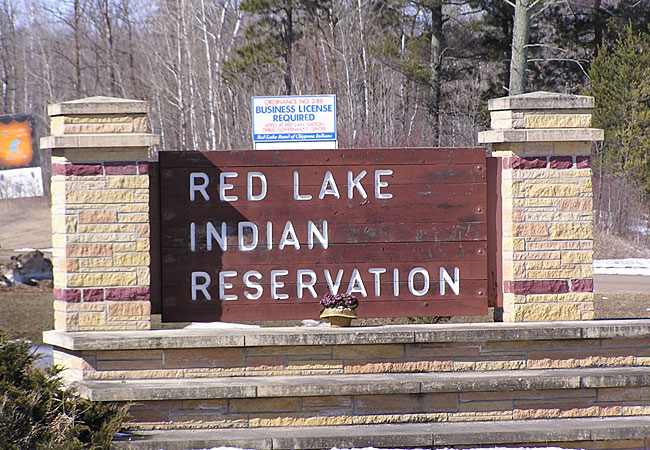 What I fear about this arrangement though is that schools like this one that self-segregate in order to try to preserve their cultural heritage will end up being no different from our American Indian reservation schools. Already there are tell-tale signs that this is what is already happening. Reservation schools are treated just like any other public school. They receive foundation aid and their local taxpayers are allowed to levy local property taxes to increase revenue to their schools. Unfortunately, the property values on reservations are so low that even a very high percentage would not lift school funding much beyond the foundation aid. Essentially, our state has found a way to keep economically depressed children on Indian reservations even more economically depressed. I see the same thing happening with these charter schools in the inner city. The state allows schools to be independently chartered and locally run but these charter schools are not allowed to levy taxpayer funds. Unless they are given grant money or find a Broad, Gates, or Walton to make up the difference they, like the reservation schools, must rely solely on foundation aid, aid which is nearly 1/3 per pupil what Minnesota's richest school district spends on it's children. And by the way, CSE has an 87% free and reduced lunch rate and nearly 100% ELL population. Most of our students are new to the country within the last four years. If there is a group in Minnesota in need of a greater portion of state aid it is this group.
So, this is my moral dilemma. I want to help support the Hmong people to retain their cultural heritage while at the same time supporting racial desegregation. The way I see it both EMID and CSE are victims of present political winds in education. Winds that help to ensure liberty for some and justice for those who can afford to pay for it.
Tomorrow I will write more about what we are trying to do at CSE.