Friday, October 29, 2010

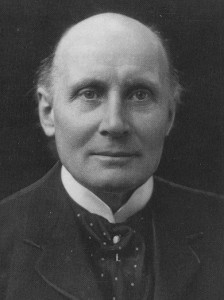
Twitter Book Club: Alfred North Whitehead (1917-1929) The Aims of Education - Chapter 3

The Rhythmic Claims of Freedom and Discipline

"In the schools of antiquity philosophers aspired to impart wisdom, in modern colleges our humbler aim is to teach subjects." Whiteheadless than a minute ago via Twittelator


"you may easily acquire knowledge and remain bare of wisdom." Whiteheadless than a minute ago via Twittelator


"The craving for expansion, for activity, inherent in youth is disgusted by a dry imposition of disciplined knowledge." Whiteheadless than a minute ago via Twittelator


"cursed be the dullard who destroys wonder." Whiteheadless than a minute ago via Twittelator


I love this last quote. What are we doing in our schools today to nurture and grow our students' sense of wonder?

Thursday, October 28, 2010

Weekly Tech Tip - K12 Online Conference

Rather than post one of my regular Weekly Tech Tips this week I would like to turn your attention, if it is not already there, to the K12 Online Conference. The K12 Online Conference is a free annual online education and technology conference. Unlike other conferences this one is asynchronous and all presentations are archived for future viewing. The session presentations are created and shared using web 2.0 tools (most of them free). Sessions are curated by a group of conference conveners and in the weeks of the conference they release the links daily to give the sense of an event. These sessions are created by teachers with real classroom application in mind.

Weekly Tech Tip:

Opening Keynote: Sharing: A Moral Imperative by Dean Shareski


http://k12onlineconference.org/

K12 Online Conference 2010 via kwout

--------------------------------------------------------------------------------------------------

Video Festival:

The Seven Spaces of Technology in School Environments from Ewan McIntosh on Vimeo.


Link Stew:

Blog Carnival:

Retweetable Tweets:

RT @luhoka: I think people underestimate how much respect is given to those that actually say "I don't know"less than a minute ago via Tweetie for Mac

Tuesday, October 26, 2010

Why This Year's Midterm Election Is So Important For Education #edchat

We are just one week away from the midterm elections and I wish to spend just a little bit of time today in this post to flush out why this midterm election season is so important for education. True, midterm elections are never as sexy or sensational as the years we have to decide on a president but a very strong case could be made for why this midterm election should weigh at least as heavily on our conscious. This year there are are gubernatorial races in thirty-seven states and two territories. Most of these are open seats.


I don't think most people understand the weight the people who will fill these positions will carry with regards to public education. One can think of a Governor as sort of the superintendent of all schools in a state. They get to decide who the commissioners are in the state departments of education. They get to set the agenda for legislation regarding education including school funding. They have veto power for all state-level education policies. Plus, as the chief individual in charge of the public trust and Education spending in most states being one of the top two categories of state spending when you hire someone to serve as your governor they better understand education issues (By the way, we have seen steady growth in Health and Human Services spending and I believe the 08-09 report is the first time in MN I have seen it eclipse education spending).

So, who we elect, what their views on education are, and who they surround themselves with matter greatly. With a solid majority of our states governor seats up for grabs next week the outcome of those races will largely determine the path we take with education reform. What we need to be asking these candidates and what I believe every person (and educators in particular) is how they plan to deal with the budget issues caused by having a disproportionate number of teachers at the top of the pay scale, what they plan on doing by the end of their first term when we will have a projected massive shortage of teachers when this group retires,

how do they plan on dealing with issues of equity in education,


and what purpose does public education serve.


Which of these candidates in Minnesota sound like they have thoroughly thought about these issues, what about candidates in other states?

Thursday, October 21, 2010

Twitter Book Club: Alfred North Whitehead (1917-1929) The Aims of Education - Chapter 2

The Rhythm of Education

I have to admit that I found this chapter to be a bit uninspiring. He does present an important idea but I felt he achieved his aim within the first three pages and the rest was needless dribble. But, that said, this speech was about how traditional education ignores the process people go through when they learn. Basically, he recognizes that all learners start out with disconnected stuff, then connect them, then make generalizations about their groupings. In his argument he tears apart the notion that learners must first learn the basics before they can tackle more complex subject matter and proposes that we have put things backwards. A basics first education is not sufficiently engaging, he would prefer an immersion approach. To prove this he describes the learning tasks of infants and how impossibly difficult it must be for them to learn something so abstract as how to talk. We don't teach babies how to talk by first making them learn the sounds in the alphabet, they learn to talk by being around people who talk and who talk to them.

"the postponement of difficulty is no safe clue for the maze of educational practice." Whiteheadless than a minute ago via Twittelator


"Lack of attention to the rhythm and character of mental growth is a main source of wooden futility in education." Whiteheadless than a minute ago via Twittelator


"We must banish the idea of a mythical, far-off end of education." Whiteheadless than a minute ago via Twittelator


Not quite sure where he was going with this one. While I agree an I do like this quote it doesn't exactly match up with the theme of the speech. Perhaps he was trying to make the case that this three step process of learning never ends and that we do it throughout our lives, even after our formal school years are done.

"Your learning is useless to you till you have lost your text-books, burnt your lecture notes, and forgotten (cont) http://tl.gd/6j26eoless than a minute ago via Twittelator


I like this quote very much. Too bad I will have to forget it before it is useful to me.

"The function of a University is to enable you to shed details in favour of principles." Whiteheadless than a minute ago via Twittelator


Twitter Book Club: Alfred North Whitehead (1917-1929) The Aims of Education - Chapter 1


The Aims of Education

I have to admit, I am a bit embarrassed that I have gone this far in my career without ever hearing of this author. I suspect it has a lot to do with American nationalism within education curriculum. Whitehead was British and advocating for many of the same things as John Dewey but from the other side of the Atlantic. In my teacher education I heard a great deal about Dewey but never Whitehead. I wonder if that would have been different if I receive my formal schooling elsewhere abroad.

This book is a collection of essays and speeches Whitehead gave over the course of twelve years. I am unsure what the dates are for each of the essays. This first essay on The Aims of Education is a fascinating read. Being a math teacher, Whitehead doesn't exactly demonstrate the poetic skill of some of the other authors I have read for Twitter Book Club but his ideas are definitely engaging. I find it awe inspiring to read someone who was advocating for things like interdisciplinary learning, discovery learning, specialized study, and caution against standardization from a time and place where the British School dominated the education landscape. Today we look at these ideas as new and revolutionary.

I am reading Whitehead's Aims of Education on recommendation from John I Goodlad....less than a minute ago via Twitterrific


...last time I did this was when I read Ivan Illich's Deschooling Society b/c of reference to it by Seymour Papert.less than a minute ago via Twitterrific


"A merely well-informed man is the most useless bore on God's earth. What we should aim at producing is men (cont) http://tl.gd/6i2h9tless than a minute ago via Twittelator


"Every intellectual revolution which has ever stirred humanity into greatness has been a passionate protest against inert ideas." Whiteheadless than a minute ago via Twittelator


"From the very beginning of his education, the child should experience the joy of discovery." Whiteheadless than a minute ago via Twittelator


"Education is the acquisition of the art of the utilization of knowledge." Whiteheadless than a minute ago via Twittelator


"In education, as elsewhere, the broad primrose path leads to a nasty place." Whiteheadless than a minute ago via Twittelator


Whitehead does have his poetic moments. I love this quote. Makes me think of Robert Frost. It also makes me think of all the times we have heard this product or that solution as making teaching or learning "easy." Is easy always better? Is the easy path ever all that educative?

"no educational system is possible unless every question directly asked of a pupil at any examination is (cont) http://tl.gd/6i2o8sless than a minute ago via Twittelator


Whitehead makes a strong case against standardized testing here. Yesterday I sat in on a staff development session on assessing NWEA data. Came to realize that in our MYP programme we are giving each student a test in both reading and math each quarter plus they take the state tests in reading, math, and science twice in their time with us. Thats 2 NWEA tests times 4 quarters times 5 years plus 3 MAP tests times 2 times = 46 externally created tests our kids get in their time with us. Now, each time one of these tests is administered (except for two of the MAP tests) it takes up one week of building-wide computer lab access. Thats 42 tests times 5 days = 210 days students and teachers do not have access to our school's computers for use in learning. Since we have fewer than 200 student contact days in a school year that is one full year of a student's MYP program where our schools computers are unavailable. Since we are nowhere near close to having a 1:1 ratio (more like 1:4) our kids only realistically have available access to computers in school for 1 year of their 5 year MYP programme. During that time that they are available I have observe that those machines sit idle and unused about 1/2 to 2/3 of the time. That means that the average student only has in-school access to a computer for learning for 1/3 to 1/2 of a year over the course of their 5 years in our school. If computers do help facilitate and accelerate learning then I think I have a data-driven argument against the use of computers for this kind of testing.

"The solution which I am urging, is to eradicate the fatal disconnection of subjects which kills the (cont) http://tl.gd/6i2rggless than a minute ago via Twittelator


"I am certain that in education wherever you exclude specialism you destroy life." Whiteheadless than a minute ago via Twittelator


"The machinery of our secondary education is rigid where it should be yielding, and lax where it should be rigid." Whiteheadless than a minute ago via Twittelator


"I suggest that no system of external tests which aims primarily at examining individual scholars can (cont) http://tl.gd/6i34qpless than a minute ago via Twittelator


"the first requisite for educational reform is the school as a unit, with its approved curriculum based on (cont) http://tl.gd/6i361mless than a minute ago via Twittelator


Wow, between 1917 and 1929 Whitehead was calling for interdisciplinary Educ., differentiated instruction, & against standardized tests.less than a minute ago via Twitterrific


@anderscj TY - very interesting to me :O)less than a minute ago via Seesmic twhirl


@Darcy1968 I wonder if I had receive my ed credentials on the other side of the pond if I wld have been as familiar with Whitehead as Dewey.less than a minute ago via web


@anderscj Thanks - "It's not what they are at 18, it is what they become afterwards that matters." I like that thought. Read on!less than a minute ago via web


@mrunkle I thnk he contradicts himself with that one. What of students who don't live to see 18? Do their lives not matter?less than a minute ago via Mobile Web


@mrunkle He goes to great length to explain that the present is the only time that matters.less than a minute ago via Mobile Web


Additionally, the following were sent to me via DM:

ChrisVacek
Following your Whitehead quotes. My favorite from his Metaphysics book, "Appearance sheds it's note of derivation." So few read anymore...

ChrisVacek
Once a thing is what it becomes, the process of how it got to be that way is lost. When we appreciate an oak tree, we don't think, "acorn".

I am not sure why Chris sent these to me as a DM and not an @reply and I am not in the habit of sharing what I get via DM but I don't think either of these message constitute any need for privacy or confidentiality.